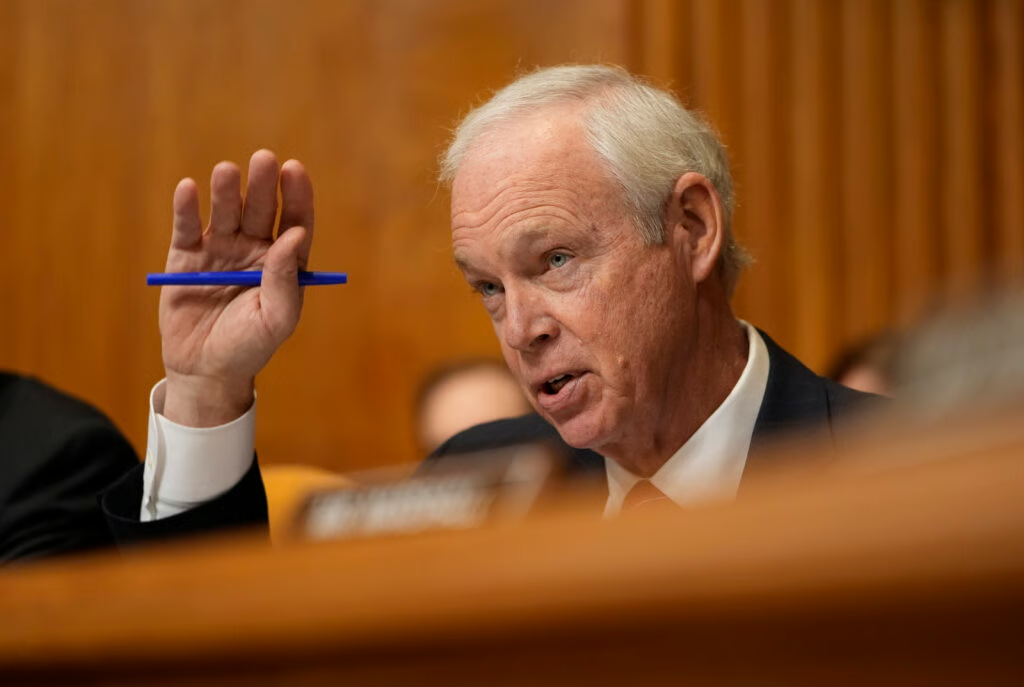
Sen. Ron Johnson (R-Wis.) called Social Security a “legal Ponzi scheme” ahead of a Senate hearing that he said would expose the program’s mismanagement.
Johnson made the remarks in an X post on Tuesday, sharing a video about Social Security and a Senate Budget GOP post promoting the “Social Security: The Reality” hearing, which he is scheduled to chair at 11 a.m. ET Thursday.
“Social Security is a legal Ponzi scheme. Tomorrow’s hearing will lay out the facts on how it’s been grossly mismanaged. It will be interesting to see how many senators will resist acknowledging the cold hard reality,” Johnson wrote.
Johnson Says Social Security Surpluses Were Squandered
In the video, Johnson said workers’ contributions were spent “the minute it came in the door” and described the money as “squandered.”
He argued that following the agreement between former House Speaker Tip O’Neill and President Ronald Reagan, the government should have invested Social Security surpluses beginning in 1986. Had it done so, he said, the program could have accumulated $14.5 trillion in “hard assets” to pay benefits. Johnson said the government had not been honest with the American public and promised to tell them the truth.
He ended by saying, “I’m going to tell them the truth as much as they’re not going to want to hear it.”
Recent Reports Examine Social Security’s Funding Problems
The concerns over Social Security’s finances have also featured in separate developments in recent weeks. In a Sunday post, market commentator The Kobeissi Letter highlighted a reported $221 billion deficit in the Social Security trust funds for fiscal 2026. Benefit costs reached $1.5 trillion, up $83 billion year over year, while income increased to $1.3 trillion, leaving a gap between what the program collected and what it paid out.
A separate AARP Public Policy Institute report released in November examined how changes in taxable wages have affected the program’s finances over a longer period. It found that wages subject to Social Security payroll taxes declined from 41% of U.S. gross domestic product in 1983 to 34% in 2025. The report estimated that maintaining the earlier share could have generated an additional $10.8 trillion in payroll-tax revenue and interest between 1984 and 2034, potentially extending the combined trust funds’ projected life to 2059.
Another proposal involving investment assets came from Sen. Bill Cassidy (R-La.), who outlined a $1.5 trillion investment fund in October and discussed it again in a Sunday interview. Cassidy said the fund, which would be separate from the Social Security Trust Fund, could eventually cover up to 70% of Social Security’s funding needs over the long term.
Disclaimer: This content was partially produced with the help of AI tools and was reviewed and published by Benzinga editors.
Image: USA TODAY Network via Reuters Connect